Friday, December 27, 2013

What Those Nasty White Chunks That Sometimes Come From Your Throat Are?

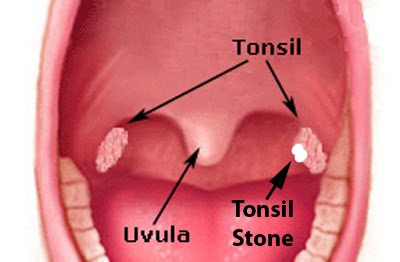
Have you ever noticed those foul smelling, small, white chunks that you can sometimes feel at the back of your throat when you swallow are? They’re called Tonsilloliths or Tonsil Stones. Although most people experience these little white balls  at the back of the throat that often get coughed up into the mouth, this widespread affliction is rarely talked about and the awareness about it very low.  Many suffer in silence believing that their alone or the occurrence is nothing more than dregs of last night’s dinner.  Another reason people don’t dispense with their problem of tonsil stones is because they are embarrassingly nasty and foul smelling!
Tonsilloliths, also known as tonsil stones are stinky little globs of mucus, dead cells, debris and bacteria that form in the tonsil crypts which are simply small pockets or divots that appear in everyone’s tonsils. When the trapped dead cells, mucus, and debris harden or calcify, they form white/yellow ball in the tonsil pockets. They usually appear as tiny little chunks in the shape of cauliflower and smell like they could wake up your dead grandma.
The strong unpleasant odor is caused by a build-up of sulfur-producing bacteria that feeds on the tonsil stones collected in the crypts of the tonsils and is a combination of hydrogen sulfide, methyl mercaptan, and other stinky substances that form in it. Tonsil stones can range from a size of a small peppercorn to a rather large size causing discomfort in the throat and in some cases uncomfortable side effects, including sore throat and ear pain and tonsillitis. It is also believed to be one of the reasons for Halitosis (bad breath).
Tonsil-StonesTonsil stones are fairly common in adults and children. However, they tend to occur most often in people who suffer from chronic inflammation in their tonsils or repeated bouts of tonsillitis. Studies have shown that people who have had their tonsils removed, under most circumstances, almost never experience tonsil stones.
There are some effective treatments for reducing the occurrence of tonsil stones. Removing one’s tonsils is an option, but not the best solution as tonsils play a role in the immune system and are meant to function like nets, trapping incoming bacteria and virus particles that are passing through your throat. Easy home treatments like gargling salt water, or non-alcohol mouthwash is often advised for getting rid of tonsiloliths. A water pick that emits powerful pulses of water is also a useful tool for clearing the tonsil crypts. The simplest solution is to use a cotton swab or toothbrush so you can push the nasty little things out and rinse your mouth free of them.
Bonus Facts:
  • There are about 9,000 taste buds on the surface of the tongue, in the throat, and on the roof of the mouth. Taste buds contain chemoreceptors that respond to chemicals from food and other substances that are dissolved by the saliva in the mouth.
  • Your mouth produces 1 liter (1.8 pints) of saliva a day. We each produce about 10,000 gallons of saliva in a lifetime. Saliva is required for taste—until food is dissolved by saliva, we cannot taste it.
  • The average American eats 50 tonnes of food and drinks 50,000 liters (11,000 gallons) of liquid during his life. It also takes food seven seconds to go from the mouth to the stomach via the esophagus.

Thursday, December 19, 2013

Countless Uses for Coconut Oil

Coconut oil has been a dietary and beauty staple for millennia. It’s a powerful destroyer of all kinds of microbes, from viruses to bacteria to protozoa, many of which can be harmful, and provides your body with high-quality fat that is critical for optimal health.

Around 50 percent of the fat in coconut oil is lauric acid, which is rarely found in nature. In fact, coconut oil contains the most lauric acid of any substance on Earth.

Your body converts lauric acid into monolaurin, a monoglyceride that can actually destroy lipid-coated viruses such as HIV and herpes, influenza, measles, gram-negative bacteria, and protozoa such as giardia lamblia.

This is undoubtedly part of what makes it so medicinally useful—both when taken internally and applied externally.

Coconut oil is comprised of medium chain fatty acids (MCFAs) that are easily digested and readily cross cell membranes. MCFAs are immediately converted by your liver into energy rather than being stored as fat. This is in part why I recommend coconut oil as an ideal replacement for non-vegetable carbohydrates.

Coconut oil is easy on your digestive system and does not produce an insulin spike in your bloodstream, so for a quick energy boost, you could simply eat a spoonful of coconut oil, or add it to your food. In the video above, I also share my recipe for a scrumptious yet healthful chocolate treat, courtesy of the healthy fat from coconut oil.

To get more coconut oil into your diet, you can add it to your tea or coffee, in lieu of a sweetener. It will also help improve absorption of fat-soluble vitamins, so taking a spoonful of coconut oil along with your daily vitamins may help boost their effectiveness.

Coconut oil is ideal for all sorts of cooking and baking, as it can withstand higher temperatures without being damaged like many other oils (olive oil, for example, should not be used for cooking for this reason).

Furthermore, coconut oil does not go rancid, which is a huge boon when you’re making homemade concoctions. Coconut oil that has been kept at room temperature for a year has been tested for rancidity, and showed no evidence of it. Since you would expect the small percentage of unsaturated oils naturally contained in coconut oil to become rancid, it seems that the other (saturated) oils have a powerful antioxidant effect.

General Health Benefits of Coconut Oil

In all, coconut oil offers a truly impressive array of health benefits when included in your daily diet. In addition to its antimicrobial properties, coconut oil is beneficial for:


While coconut oil is an ideal food for fostering health and beauty from the inside out, it also has a staggering number of other uses, from topical beauty applications to first aid treatments, to general household cleaning. Once you’re done reading through this article, you’ll probably be inspired to stock up for all eventualities!

Coconut Oil Can Replace Dozens of Beauty and Personal Care Products

One of the best personal care products you’ll ever find may be sitting in your kitchen cupboard right now. The video above, featuring HolisticHabits3 blogger and coconut oil aficionado Sarah, recounts many of its beauty uses. The second video includes a recipe making your own coconut oil-based deodorant. A previous article by Delicious Obsessions4 also lists no less than 122 creative uses for this household staple, including 21 DIY coconut oil skin care recipes.5 For example, coconut oil can be used to replace the following personal care and beauty products.


Hair’s Best Friend
Coconut oil is also known for its hair benefits. Most women seem to prefer using it as a pre-shampoo conditioner. Simply massage the coconut oil onto dry hair and leave on for about an hour or longer. You could even leave it on overnight. Just wear a shower cap to protect your pillow. Then, wash and style as usual.

When applied in this manner, the coconut oil inhibits the penetration of water into the hair strands, which would otherwise cause the cuticle, or surface of the hair shaft, to rise, making it prone to damage and breakage. Furthermore, when applied as a pre-wash treatment, a small amount of the coconut oil is able to penetrate deeper into the hair shaft during the wash, when the hair fiber swells slightly.

This can also explain why so many rave about the oil’s ability to prevent “the frizzies” in humid weather—this is another feature of its hydrophobic activity. More porous types of hair may find coconut oil particularly beneficial, such as African and chemically treated hair, as well as those suffering with any type of scalp problems, including dandruff.

Coconut oil mixed with baking soda makes for very simple and inexpensive, yet effective, toothpaste. It’s also a great alternative if you want a fluoride-free toothpaste but don’t want to spend the extra money, since they tend to cost more than most regular, fluoridated toothpaste brands.

Another oral health technique where I believe coconut oil can be quite beneficial is oil pulling. This technique has significantly reduced my plaque buildup, allowing me to go longer between visits to the dental hygienist. (Adding fermented vegetables to my diet has been another game-changer in my oral health.)

Oil pulling is a practice dating back thousands of years, having originated with Ayurvedic medicine. When oil pulling is combined with the antimicrobial power of coconut oil, I believe it can be a very powerful health tool. Sesame oil is traditionally recommended, but it has relatively high concentration of omega-6 oils. Therefore, I believe coconut oil is far superior, and, in my mind, it tastes better. But from a mechanical and biophysical perspective, it is likely that both work.

Oil pulling involves rinsing your mouth with the oil, much like you would with a mouthwash. The oil is “worked” around your mouth by pushing, pulling, and drawing it through your teeth for a period of 15 minutes. If you are obsessive like me and want even better results, you can go for 30-45 minutes. This process allows the oil to “pull out” bacteria, viruses, fungi and other debris. The best time is in the morning before eating breakfast, but it can be done at any time. I try to do it twice a day if my schedule allows. When done, spit out the oil and rinse your mouth with water. Avoid swallowing the oil as it will be loaded with bacteria and whatever potential toxins and debris it has pulled out.

When done correctly, oil pulling has a significant cleansing, detoxifying and healing affect, not only for your mouth and sinuses but for the rest of your body as well. Candida and Streptococcus are common residents in your mouth, and these germs and their toxic waste products can contribute to plaque accumulation and tooth decay, in addition to secondary infections and chronic inflammation throughout your body. Oil pulling may help lessen the overall toxic burden on your immune system by preventing the spread of these organisms from your mouth to the rest of your body, by way of your bloodstream.

Coconut Oil to the Rescue
Besides its usefulness in the kitchen and bathroom, coconut oil deserves a place in your medicine cabinet as well—again courtesy of its antimicrobial and anti-viral activity. For example, coconut oil may be helpful in the treatment of:

Coconut Oil—More Effective Than Permethrin for Head Lice
According to research published in the European Journal of Pediatrics,14 a combination of coconut oil and anise was found to be nearly twice as effective as the commonly prescribed permethrin lotion for the treatment of head lice. According to the authors:

“We designed a randomized, controlled, parallel group trial involving 100 participants with active head louse infestation to investigate the activity of a coconut and anise spray and to see whether permethrin lotion is still effective, using two applications of product 9 days apart. The spray was significantly more successful (41/50, 82.0%) cures compared with permethrin (21/50, 42.0 %…). Per-protocol success was 83.3% and 44.7%, respectively. Thirty-three people reported irritant reactions following alcohol contact with excoriated skin. We concluded that, although permethrin lotion is still effective for some people, the coconut and anise spray can be a significantly more effective alternative treatment.” [Emphasis mine]

Isn’t it wonderful to see how nature provides us with so many effective solutions to so many of our ills? And does so in a way that is oftentimes more effective than our chemical drug concoctions! Another anecdotal Hawaiian head lice treatment15 is to first soak your hair in vinegar and leave it in to dry (don’t rinse). Next, coat your hair with coconut oil over night. I’d recommend sleeping with a shower cap to protect your bedding. The following day, the nits reportedly comb out easily.

14 Surprising Uses for Coconut Oil around the House
Last but not least, coconut oil can be used for a number of household tasks otherwise relegated to more costly, and potentially toxic, alternatives. Following are 14 creative yet practical uses for this fantastic oil:


Thursday, November 28, 2013

Truth About Sugars

 It is easy to become confused by the various sugars and sweeteners, so here is a basic overview: 


* Saccharide = sugar

* Glucose (aka “dextrose” or “grape sugar”), galactose (“milk sugar”), and fructose (“fruit sugar”) are all “monosaccharides” (i.e. single sugar molecules), known as “simple sugars.” The primary difference between them is how your body metabolizes them.


* Glucose is the form of energy you were designed to run on. Every cell in your body uses glucose for energy.

* High amounts of fructose are very damaging to the body, since if fructose isn’t burned immediately for energy, it travels directly to the liver, where it is converted to triglycerides (fats). Excess triglycerides increase insulin resistance (and insulin production), thus contributing to diabetes in a “back door” fashion.

* The simple sugars can combine to form more complex sugars, like sucrose (“table sugar”) which is a “disaccharide” comprised of 50% glucose and 50% fructose.

* “Refined” white sugar (pure sucrose) is washed with a syrup solution, then with hot water, clarified (usually chemically) to remove impurities, decolorized, concentrated, evaporated, re-boiled until crystals form, centrifuged again to separate, then dried. By this point, any remnants of “natural goodness” and “nutritional value” have completely dissappeared! Quite frankly, white sugar should be considered to be an “industrial product” rather than a “food.”

* “Brown sugar” is just white sugar mixed with molasses.

* “Raw” sugar is not really raw - it has been cooked, and most of the minerals and vitamins are gone. But it’s probably a little better than refined white sugar because it has a little of the molasses remaining.

* Aspartame is a highly addictive, neurotoxic, rat poison that causes brain lesions and cancer ... need I say more?

* Splenda (sucralose) is *NOT* a sugar, despite its deceptive marketing slogan, “made from sugar.” It’s a chlorinated artificial sweetener in line with aspartame, though not quite as harmful.

* Honey is approximately 50% fructose, but in natural (raw) form contains many health benefits.

* Stevia is an extremely sweet herb derived from the leaf of the South American stevia plant, which is completely safe (in its natural form).

* Agave nectar is made from the agave plant, which is a cactus. Sound natural, right? Like maple syrup from a tree, or honey from a beehive. Only it isn’t. Agave is HIGHLY processed, and the end product does not even remotely resemble the original agave plant. And agave is approximately 80% fructose (much higher than honey and maple syrup).
* High fructose corn syrup (HFCS) is 55% fructose and 45% glucose. I talked about the deleterious effects of HFCS yesterday...

* Rapadura is the pure juice extracted from the sugar cane (using a press), which is then evaporated over low heats, whilst being stirred with paddles, then seive ground to produce a grainy sugar. It has not been cooked at high heats, and spun to change it into crystals, and the molasses has not been separated from the sugar. “Sucanat” is the USA trade name for Rapadura.

* Coconut sugar is made from the sweet watery sap that drips from the cut flower buds of fresh coconuts. It has a low glycemic index (GI) and is rich in amino acids. It is typically less than 10% fructose, with sucrose being the primary component.

* Xylitol is a sweetener known as a “sugar alcohol” (or polyol). Sugar alcohols are neither sugars nor alcohols – they are carbohydrates (with structures that happen to resemble sugar and alcohol). Xylitol is extracted from birch cellulose. Unlike sugar, Xylitol is slowly absorbed, does not cause a rapid blood sugar increase, and does not require an immediate insulin response from the body to be metabolized. And because Xylitol is anti-bacterial, many studies have shown that it actually helps prevent dental cavities, ear infections, and some evidence suggests that it helps prevent gum disease.

Wednesday, November 27, 2013

A Killer In Your Fridge ~ Sweet Poison

In October of 2001, my sister started getting very sick She had stomach spasms and she was having a hard time getting around. Walking was a major chore. It took everything she had just to get out of bed; she was in so much pain.
By March 2002, she had undergone several tissue and muscle biopsies and was on 24 various prescription medications. The doctors could not determine what was wrong with her. She was in so much pain, and so sick she just knew she was dying.
She put her house, bank accounts, life insurance, etc., in her oldest daughter’s name, and made sure that her younger children were to be taken care of.
She also wanted her last hooray, so she planned a trip to Florida (basically in a wheelchair) for March 22nd.
On March 19, I called her to ask how her most recent tests went, and she said they didn’t find anything on the test, but they believe she had MS.
I recalled an article a friend of mine e-mailed to me and I asked my sister if she drank diet soda? She told me that she did. As a matter of fact, she was getting ready to crack one open that moment.
I told her not to open it, and to stop drinking the diet soda! I e-mailed her an article my friend, a lawyer, had sent. My sister called me within 32 hours after our phone conversation and told me she had stopped drinking the diet soda AND she could walk! The muscle spasms went away. She said she didn’t feel 100% but, she sure felt a lot better.
She told me she was going to her doctor with this article and would call me when she got home.
Well, she called me, and said her doctor was amazed! He is going to call all of his MS patients to find out if they consumed artificial sweeteners of any kind. In a nutshell, she was being poisoned by the Aspartame in the diet soda.. and literally dying a slow and miserable death
When she got to Florida March 22, all she had to take was one pill, and that was a pill for the Aspartame poisoning! She is well on her way to a complete recovery. And she is walking! No wheelchair! This article saved her life. If it says ‘SUGAR FREE’ on the label; DO NOT EVEN THINK ABOUT IT!  I have spent several days lecturing at the WORLD ENVIRONMENTAL CONFERENCE on ‘ASPARTAME,’ marketed as ‘Nutra Sweet,’ ‘Equal,’ and ‘Spoonful. ‘In the keynote address by the EPA, it was announced that in the United States in 2001 there is an epidemic of multiple sclerosis and systemic lupus. It was difficult to determine exactly what toxin was causing this to be rampant. I stood up and said that I was there to lecture on exactly that subject.
I will explain why Aspartame is so dangerous: When the temperature of this sweetener exceeds 86 degrees F, the wood alcohol in ASPARTAME converts to formaldehyde and then to formic acid, which in turn causes metabolic acidosis. Formic acid is the poison found in the sting of fire ants. The methanol toxicity mimics, among other conditions, multiple sclerosis and systemic lupus.
Many people were being diagnosed in error. Although multiple sclerosis is not a death sentence, Methanol toxicity is!
Systemic lupus has become almost as rampant as multiple sclerosis, especially with Diet Coke and Diet Pepsi drinkers. The victim usually does not know that the Aspartame is the culprit. He or she continues it’s use; irritating the lupus to such a degree that it may become a life-threatening condition. We have seen patients with systemic lupus become asymptotic, once taken off diet sodas.
In cases of those diagnosed with Multiple Sclerosis, most of the symptoms disappear. We’ve seen many cases where vision loss returned and hearing loss improved markedly.
This also applies to cases of tinnitus and fibromyalgia. During a lecture, I said, ‘If you are using ASPARTAME (Nutra Sweet, Equal, Spoonful, etc) and you suffer from fibromyalgia symptoms, spasms, shooting, pains, numbness in your legs, Cramps, Vertigo, Dizziness, Headaches, Tinnitus, Joint pain, unexplainable depression, anxiety attacks, slurred speech, blurred vision, or memory loss you probably have ASPARTAME poisoning!’ People were jumping up during the lecture saying, ‘I have some of these symptoms. Is it reversible?’

Yes!
Yes!
Yes!

STOP drinking diet sodas and be alert for Aspartame on food labels! Many products are fortified with it! This is a serious problem. Dr. Espart (one of my speakers) remarked that so many people seem to be symptomatic for MS and during his recent visit to a hospice; a nurse stated that six of her friends, who were heavy Diet Coke addicts, had all been diagnosed with MS. This is beyond coincidence!

Diet soda is NOT a diet product! It is a chemically altered, multiple SODIUM (salt) and ASPARTAME containing product that actually makes you crave carbohydrates.
It is far more likely to make you GAIN weight!
These products also contain formaldehyde, which stores in the fat cells, particularly in the hips and thighs. Formaldehyde is an absolute toxin and is used primarily to preserve ’tissue specimens.’
Many products we use every day contain this chemical but we SHOULD NOT store it IN our body!
Dr. H. J. Roberts stated in his lectures that once free of the ‘diet products’ and with no significant increase in exercise; his patients lost an average of 19 pounds over a trial period. Aspartame is especially dangerous for diabetics. We found that some physicians, who believed that they had a patient with retinopathy, in fact, had symptoms caused by Aspartame. The Aspartame drives the blood sugar out of control. Thus diabetics may suffer acute memory loss due to the fact that aspartic acid and phenylalanine are NEUROTOXIC when taken without the other amino acids necessary for a good balance.
Treating diabetes is all about BALANCE.. Especially with diabetics, the Aspartame passes the blood/brain barrier and it then deteriorates the neurons of the brain; causing various levels of brain damage, Seizures, Depression, Manic depression, Panic attacks, Uncontrollable anger and rage. Consumption of Aspartame causes these same symptoms in non-diabetics as well. Documentation and observation also reveal that thousands of children diagnosed with ADD and ADHD have had complete turnarounds in their behavior when these chemicals have been removed from their diet.
So called ‘behavior modification prescription drugs’ (Ritalin and others) are no longer needed. Truth be told, they were never NEEDED in the first place!  Most of these children were being ‘poisoned’ on a daily basis with the very foods that were ‘better for them than sugar. ‘It is also suspected that the Aspartame in thousands of pallets of diet Coke and diet Pepsi consumed by men and women fighting in the Gulf War, may be partially to blame for the well-known Gulf War Syndrome.
Dr. Roberts warns that it can cause birth defects, i.e. mental retardation, if taken at the time of conception and during early pregnancy. Children are especially at risk for neurological disorders and should NEVER be given artificial sweeteners.
There are many different case histories to relate of children suffering grand mal seizures and other neurological disturbances talking about a plague of neurological diseases directly caused by the use of this deadly poison.’
Herein lies the problem: There were Congressional Hearings when Aspartame was included in 100 different products and strong objection was made concerning its use. Since this initial hearing, there have been two subsequent hearings, and still nothing has been done. The drug and chemical lobbies have very deep pockets.
Sadly, MONSANTO’S patent on Aspartame has EXPIRED! There are now over 5,000 products on the market that contain this deadly chemical and there will be thousands more introduced. Everybody wants a ‘piece of the Aspartame pie. ‘I assure you that MONSANTO, the creator of Aspartame, knows how deadly it is.
And isn’t it ironic that MONSANTO funds, among others, the American Diabetes Association, the American Dietetic Association and the Conference of the American College of Physicians?
This has been recently exposed in the New York Times. These [organizations] cannot criticize any additives or convey their link to MONSANTO because they take money from the food industry and are required to endorse their products. Senator Howard Metzenbaum wrote and presented a bill that would require label warnings on products containing Aspartame, especially regarding pregnant women, children and infants.
The bill would also institute independent studies on the known dangers and the problems existing in the general population regarding seizures, changes in brain chemistry, neurological changes and behavioural symptoms.  The bill was killed. It is known that the powerful drug and chemical lobbies are responsible for this, letting loose the hounds of disease and death on an unsuspecting and uninformed public. Well, you’re informed now!
(just sharing the Aspartame article from another blog…i’m not the author.  i did write the Note…water is my area of expertise.)
Sunday, October 20, 2013

Pomegranate Found To Prevent Coronary Artery Disease Progression

A new study published in the journal Atherosclerosis confirms that pomegranate extract may prevent and/or reverse the primary pathology associated with cardiac mortality: the progressive thickening of the coronary arteries caused by the accumulation of fatty materials known as atherosclerosis.[i] 

Mice with a genetic susceptibility towards spontaneous coronary artery blockages were given pomegranate extract via their drinking water for two weeks, beginning at three weeks of age. 

Despite the fact that pomegranate treatment actually increased cholesterol levels associated with very low density lipoprotein-sized particles, the treatment both reduced the size of the atherosclerotic plaques in the aortic sinus (the dilated opening above the aortic valve) and reduced the proportion of coronary arteries with occlusive atherosclerotic plaques.

Remarkably, the researchers also found that pomegranate extract treatment resulted in the following beneficial effects: 
  • Reduced levels of oxidative stress 
  • Reduced monocytie chemotactic protein-1, a chemical messenger (chemokine) associated with inflammatory processes within the arteries. 
  • Reduced lipid accumulation in the heart muscle 
  • Reduced macrophage infiltration in the heart muscle 
  • Reduced levels of monocyte chemotactic protein-1 and fibrosis in the myocardium 
  • Reduced cardiac enlargement Reduced ECG abnormalities 


How can something as benign and commonplace as a fruit extract reverse so many aspects of coronary artery disease, simultaneously, as evidenced by the study above? 

The answer may lie in the fact that our ancestors co-evolved with certain foods (fruits in particular) for so long that a lack of adequate quantities of these foods may directly result in deteriorating organ function. 

Indeed, two-time Nobel Prize winner Linus Pauling argued that vitamin C deficiency is a fundamental cause of cardiovascular disease, owing to the fact that our hominid primate ancestors once had year-round access to fruits, and as a result lost the ability to synthesize it. [see Linus Pauling vitamin C lecture on GreenMedTV] 

Discussion 


This study adds to the already extant body of clinical research indicating that pomegranate can help unclog your arteries. 

For instance, back in 2004, the journal Clinical Nutrition published the results of a three year clinical trial in an Israeli population, finding that the daily consumption of pomegranate juice reversed carotid artery stenosis by up to 29% within 1 year. 

Remarkably, the blockages in the control group increased 9%, indicating that pomegranate's artery unblocking effects were even greater than at first apparent. [ii] 

Pomegranate's value in cardiovascular disease is quite broad, as evidenced by the following experimentally confirmed properties: 

Anti-inflammatory: Like many chronic degenerative diseases, inflammation plays a significant role in cardiovascular disease pathogenesis. There are five studies on GreenMedInfo.com indicating pomegranate's anti-inflammatory properties.[iii] 

Blood-Pressure Lowering: Pomegranate juice has natural angiotensin converting enzyme inhibiting properties, [iv] and is a nitric oxide enhancer, two well-known pathways for reducing blood pressure.[v] Finally, pomegranate extract rich in punicalagin has been found reduce the adverse effects of perturbed stress on arterial segments exposed to disturbed flow.[vi] 

Anti-Infective: Plaque buildup in the arteries often involves secondary viral and bacterial infection, including hepatitis C and Chlamydia pneumoniae.[vii] Pomegranate has a broad range of anti-bacterial and anti-viral properties. 

Antioxidant: One of the ways in which blood lipids become heart disease-promoting (atherogenic) is through oxidation. LDL, for instance, may be technically 'elevated' but harmless as long as it does not readily oxidize. Pomegranate has been found to reduce the oxidative stress in the blood, as measured by serum paraoxonase levels. One study in mice found this decrease in oxidative stress was associated with 44% reduction in the size of atherosclerotic lesions. [viii] 

For additional research on pomegranate's heart friendly properties read our article: Research: Pomegranate May Reverse Blocked Arteries 

Resources: 


[i] Aishah Al-Jarallah, Fatima Igdoura, Yi Zhang, Christine B Tenedero, Elizabeth J White, Melissa E Macdonald, Suleiman A Igdoura, Bernardo L Trigatti. The effect of pomegranate extract on coronary artery atherosclerosis in SR-BI/APOE double knockout mice. Atherosclerosis. 2013 May ;228(1):80-9. Epub 2013 Mar 7. PMID: 23528829 

[ii] Michael Aviram, Mira Rosenblat, Diana Gaitini, Samy Nitecki, Aaron Hoffman, Leslie Dornfeld, Nina Volkova, Dita Presser, Judith Attias, Harley Liker, Tony Hayek. Pomegranate juice consumption for 3 years by patients with carotid artery stenosis reduces common carotid intima-media thickness, blood pressure and LDL oxidation. Clin Nutr. 2004 Jun;23(3):423-33. PMID: 15158307 

[iii] GreenMedInfo.com, Pomegranate's Anti-Inflammatory Properties 

[iv] Mahalaxmi Mohan, Harshal Waghulde, Sanjay Kasture. Effect of pomegranate juice on Angiotensin II-induced hypertension in diabetic Wistar rats. Phytother Res. 2009 Dec 17. PMID: 20020514 

[v] Filomena de Nigris, Maria Luisa Balestrieri, Sharon Williams-Ignarro, Francesco P D'Armiento, Carmela Fiorito, Louis J Ignarro, Claudio Napoli. The influence of pomegranate fruit extract in comparison to regular pomegranate juice and seed oil on nitric oxide and arterial function in obese Zucker rats. Nitric Oxide. 2007 Aug ;17(1):50-4. Epub 2007 May 5. PMID: 17553710 

[vi] Filomena de Nigris, Sharon Williams-Ignarro, Vincenzo Sica, Lilach O Lerman, Francesco P D'Armiento, Russell E Byrns, Amelia Casamassimi, Daniela Carpentiero, Concetta Schiano, Daigo Sumi, Carmela Fiorito, Louis J Ignarro, Claudio Napoli. Effects of a pomegranate fruit extract rich in punicalagin on oxidation-sensitive genes and eNOS activity at sites of perturbed shear stress and atherogenesis. Cardiovasc Res. 2007 Jan 15;73(2):414-23. Epub 2006 Sep 1. PMID: 17014835 

[vii] Yasunori Sawayama, Kyoko Okada, Shinji Maeda, Hachiro Ohnishi, Norihiro Furusyo, Jun Hayashi. Both hepatitis C virus and Chlamydia pneumoniae infection are related to the progression of carotid atherosclerosis in patients undergoing lipid lowering therapy. Fukuoka Igaku Zasshi. 2006 Aug;97(8):245-55. PMID: 17087362 

[viii] M Aviram, L Dornfeld, M Rosenblat, N Volkova, M Kaplan, R Coleman, T Hayek, D Presser, B Fuhrman. Pomegranate juice consumption reduces oxidative stress, atherogenic modifications to LDL, and platelet aggregation: studies in humans and in atherosclerotic apolipoprotein E-deficient mice. Am J Clin Nutr. 2000 May ;71(5):1062-76. PMID: 10799367

Saturday, October 19, 2013

Ventricular Ectopic Beats

Definition

A ventricular ectopic beat (VEB) is an extra heartbeat originating in the lower chamber of the heart. This beat, also called a premature ventricular contraction (PVC), occurs before the beat triggered by the heart's normal function.

Description

Ventricular ectopic beats are common and do not indicate a problem in people without heart disease. However, if a person has aortic stenosis, heart failure, or a previous heart attack, VEBs may be followed by ventricular tachycardia and fibrillation, which can lead to sudden death.

Causes and symptoms

Although the origin of a VEB is well documented, the exact cause or causes are not well understood. Some physicians believe the beat is caused by a trigger of specific origin, while other physicians believe the beat is random. Occasional ventricular ectopic beats occur in healthy people. If there is no evidence of heart disease, there is little or no danger to the individual.
A single ventricular ectopic beat has very little effect on the pumping ability of the heart and usually does not cause any symptoms. If a symptom is felt, it is the feeling of a strong or skipped beat, often described as a thump, kick, or flip-flop. Sometimes, the sensation is referred to as a fullness in the neck.

Diagnosis

Ventricular ectopic beats are easily seen on an electrocardiogram.

Treatment

If a person is otherwise healthy, the only treatment needed is to decrease stressand limit the use of alcohol and caffeine. Cold medicines, available without prescription, sometimes contain drugs (e.g., decongestants) that stimulate the heart and should be used with caution.
If symptoms are uncomfortable, or the pattern of VEBs indicates a problem, the physician may prescribe drug therapy. Beta-blockers are quite safe and are usually tried first.
A person who has a history of heart attack or heart disease, and is experiencing frequent or complex VEBs, is at greater risk of sudden death. Drug therapy with beta-blockers will be recommended. In addition, angioplasty or coronary artery bypass surgery may relieve any underlying coronary artery blockage and reduce the danger of sudden death.
Treatment with antiarrhythmic drugs can suppress VEBs, but they can also increase the risk of a fatal abnormal rhythm. Often, extensive electrophysiologic testing and risk evaluation will be done before this method of treatment is prescribed.

Prognosis

In healthy people, VEBs are inconsequential. If the person with heart disease is able to find an effective means of controlling ventricular ectopic beats, the out-look is good.

Prevention

Occasional ventricular ectopic beats in healthy people do not need to be prevented. People with a history of heart disease can usually control VEBs with medication.

BOOKS

McGoon, Michael D., ed. Mayo Clinic Heart Book: The Ultimate Guide to Heart Health.New York: William Morrow and Co., Inc., 1993.

ORGANIZATIONS

American Heart Association. 7320 Greenville Ave. Dallas, TX 75231. (214) 373-6300. 
Dorothy Elinor Stonely

KEY TERMS


Angioplasty—A surgical procedure which dilates a narrowed or blocked part of an artery.
Aortic stenosis—A stiffening of the artery which carries blood from the heart to the body.
Beta-blockers—A class of medication used to block the cellular response to chemicals normally present in the body.
Coronary artery—The vessel which brings blood to the muscle of the heart.
Fibrillation—Rapid, uncoordinated quivering of the heart.
Heart failure—A term used when the heart is unable to pump enough blood to supply the needs of the body.

Ectopic Heartbeat

Ectopic heartbeats are small changes in an otherwise normal heartbeat that lead to extra or skipped heartbeats. They often occur without a clear cause and are most often harmless.
The two most common types of ectopic heartbeats are:
  • Premature ventricular contractions (PVC)
  • Premature atrial contractions (PAC)

Causes

Sometimes ectopic heartbeats are seen with: 
  • Changes in the blood, such as a low potassium level (hypokalemia)
  • Decrease in blood supply to the heart
  • Heart muscle disease (cardiomyopathy)
Ectopic beats may be caused or made worse by smoking, alcohol use, caffeine, medications such as stimulants, and some illicit drugs.
Ectopic heartbeats are rare in children without heart disease that was present at birth (congenital). Most extra heartbeats in children are premature atrial contractions (PACs), which are almost always harmless.
In adults, ectopic heartbeats are common. They are most often due to PACs or PVCs. Their causes should be investigated, although usually no treatment is needed.

Symptoms

Symptoms include:
  • Feeling your heart beat (palpitations)
  • Feeling like your heart stopped or skipped a beat
  • Feeling of occasional, forceful beats
Note: There may be no symptoms.

Exams and Tests

A physical examination may show an occasional uneven pulse. If the ectopic heartbeats do not occur very often, your doctor may not find them during a physical exam.
Blood pressure is usually normal.
The following tests may be done:
  • Continuous ambulatory cardiac monitoring (Holter monitor, patient-activated recording device, or implanted loop recorder)
  • Coronary angiography
  • ECG
  • Echocardiogram

Treatment

Limiting caffeine, alcohol, and tobacco may reduce the risk and frequency of ectopic heartbeats in certain people. Exercise often helps people who are inactive.
Most ectopic heartbeats do not need to be treated. The condition is only treated if your symptoms are severe or if the extra beats occur very often.
The cause of the heartbeats, if discovered, may also need to be treated.

Outlook (Prognosis)

Sometimes, ectopic heartbeats may mean you are at increased risk for other serious abnormal heart rhythms, such as ventricular tachycardia.

When to Contact a Medical Professional

Call your health care provider if:
  • You keep feeling the sensation of your heart pounding or racing (palpitations)
  • You have palpitations with chest pain or other symptoms
  • You have this condition and your symptoms get worse or do not improve with treatment

Alternative Names

PVB (premature ventricular beat); Premature beats; PVC (premature ventricular complex/contraction); Extrasystole

References

Olgin JE. Approach to the patient with suspected arrhythmias. In: Goldman L, Schafer AI, eds. Cecil Medicine. 24th ed. Philadelphia, Pa: Saunders Elsevier; 2011:chap. 62.
Rubart M, Zipes D. Genesis of cardiac arrhythmias: electrophysiologic considerations. In: Bonow RO, Mann DL, Zipes DP, Libby P, eds. Braunwald's Heart Disease: A Textbook of Cardiovascular Medicine. 9th ed. Philadelphia, Pa: Saunders Elsevier; 2011:chap 35.